Case study · SEDA · 2024–25
SEDA Explorer
An engineer-built tool turned into a real product. I rebuilt SEDA's blockchain explorer on a new design system, with a navigation model that could hold every page the chain needed.
- Role
- Design Lead, then Product Designer
- Timeline
- Aug 2024 – Apr 2025
- Built by
- SEDA's front-end developer
- Shipped
- April 2025
What it is
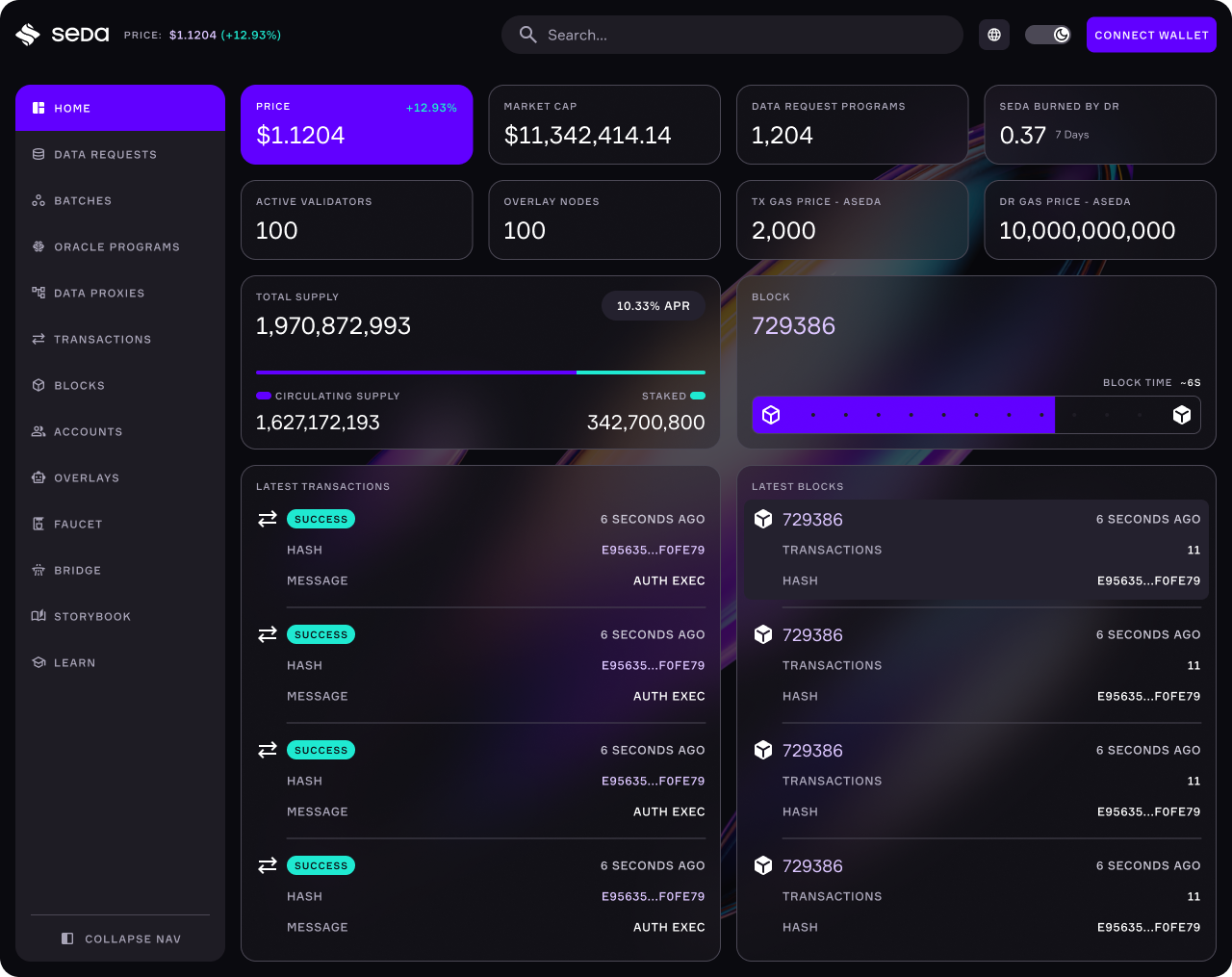
Like Etherscan, but for the SEDA chain. Alongside the usual blocks, transactions and accounts, it tracks what makes SEDA different: the oracle programs developers deploy, and the data requests that run them.
Where it started
Engineering had built the first explorer out of necessity. It covered the basics, but there was no dashboard, no accounts, no oracle programs and no data requests, and with no design system behind it, every page looked a little different.
Before
- Built by engineers, page by page
- A handful of core pages
- Top navigation
- No shared visual language
After
- Designed as one product
- A dashboard plus every SEDA-specific view
- Collapsible side navigation
- Built on a design system
Key decisions
A system before screens
Instead of redesigning page by page, I proposed building a design system first. It gave the explorer one consistent identity, and it gave the team a foundation to design and ship every future product faster.
Side nav over top nav
The explorer was growing from a few pages to more than a dozen. A top bar would have buried most of them in menus. A collapsible side navigation keeps every section one click away, and leaves room to grow.
The pages
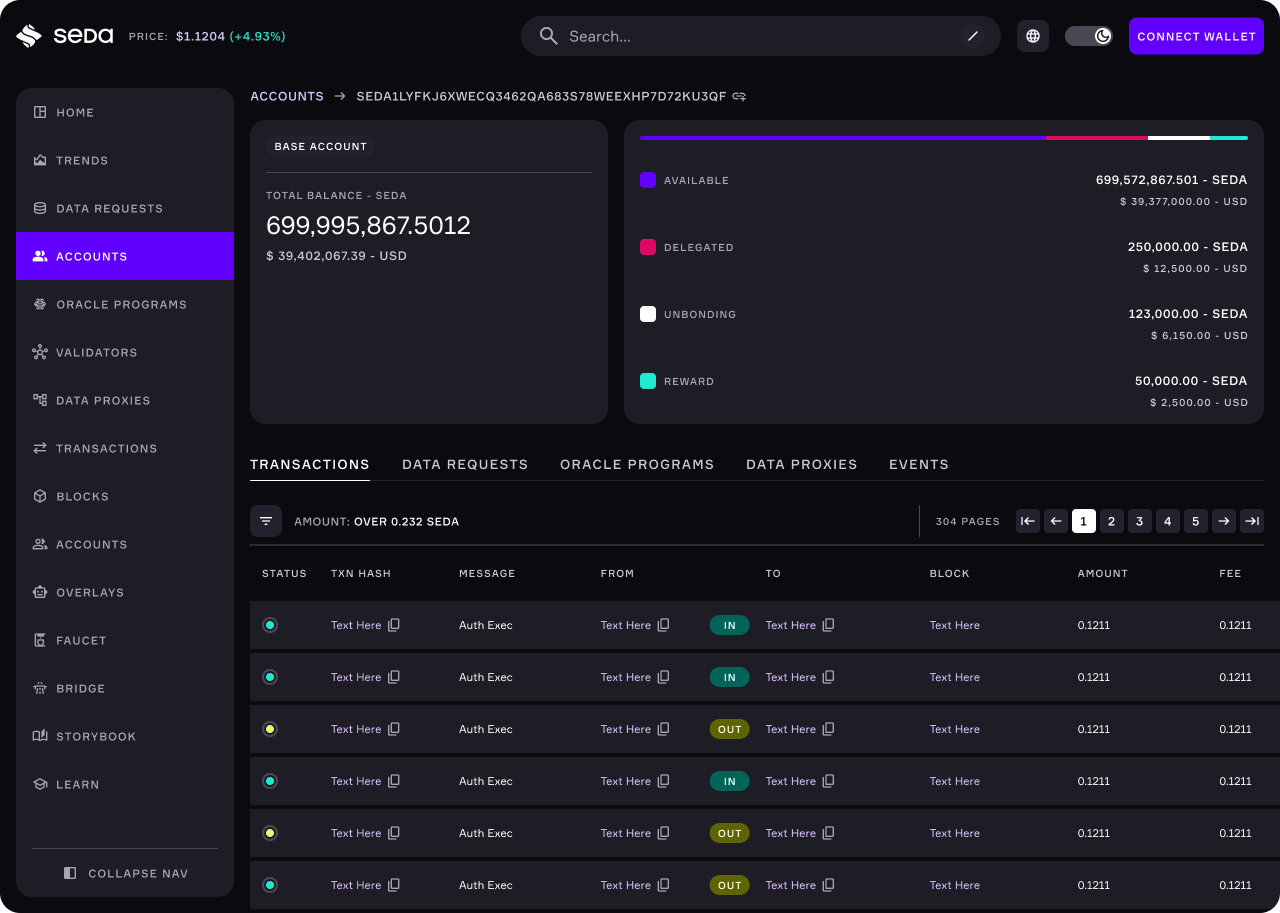
I redesigned the whole explorer and added the views it was missing.
Working with engineering
The team knew what they needed. My job was to shape it into a product, then keep it buildable.
Where it landed
The revamped explorer launched in April 2025, and the team adopted the design system widely. A later change in SEDA's business model reduced the explorer's role, but the system lived on: it became the base I revamped for the SEDA Fast dashboard.
Looking back
The team came in knowing what they wanted, so I relied on them for feedback. Looking back, I'd have worked more closely with our community manager to hear from the people using the explorer directly.